Collections · तारण Tāraṇa
Crossing the Waters
Every tradition that speaks of the spiritual life for long enough arrives, sooner or later, at water: a river to be forded, a sea to be crossed, a far bank that cannot be seen from where you stand.
The intention
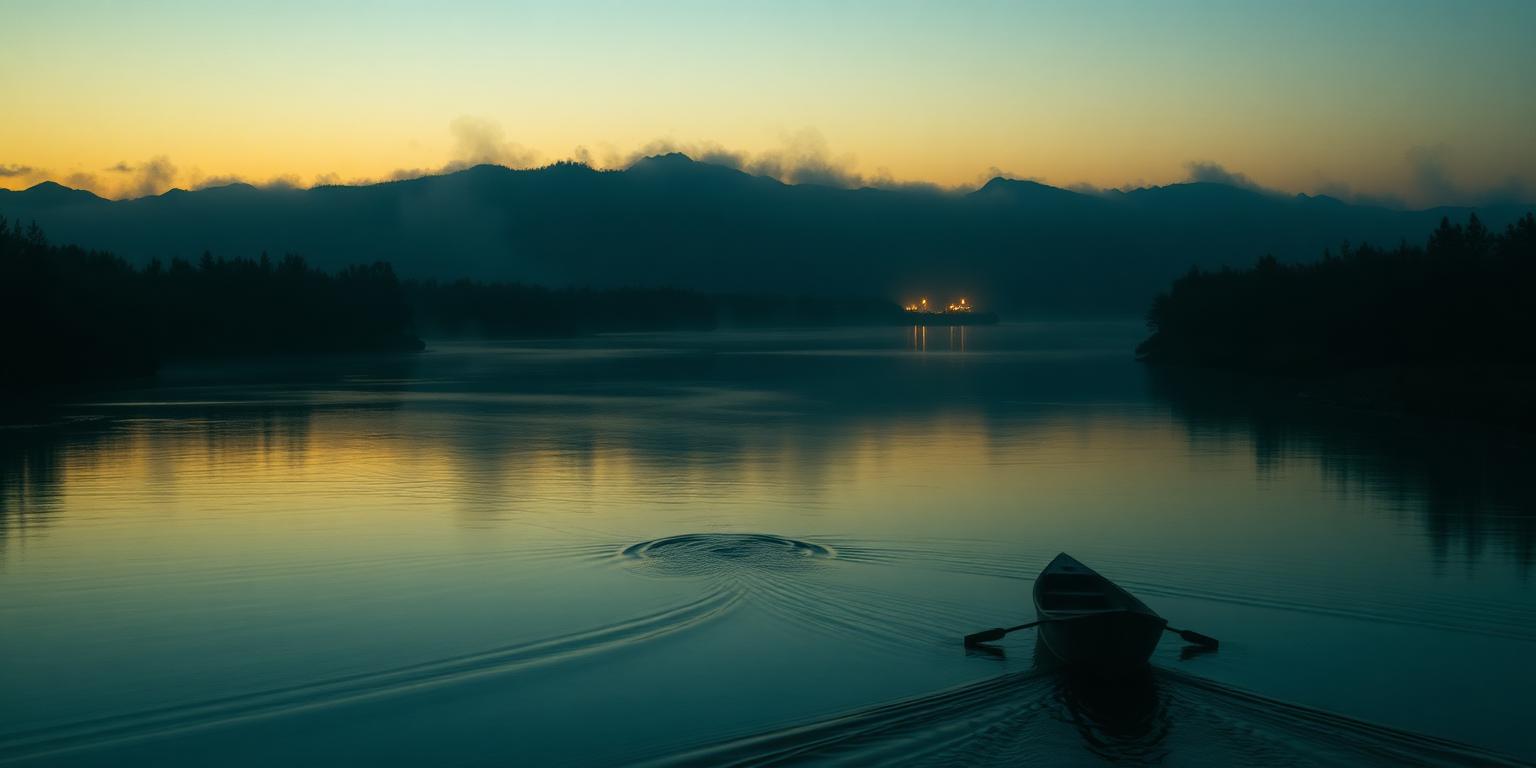
Crossing the Waters is not a collection about arriving. It is about the middle of the passage — the part with no landmarks, when the shore you left is out of sight and the one ahead has not appeared.
The Sanskrit root tṝ, to cross over, gives us tāraṇa (a crossing) and tīrtha, a ford — a shallow place where a river may be crossed. In India the word came to name pilgrimage places themselves, sites where the crossing from one condition of life to another is thought possible.
Held as an intention, it asks something modest: not that the water be removed, but that you keep moving through it.
Historical & traditional context
In Buddhist teaching the far shore, pāra, is the standing image for release. The Dhammapada devotes a chapter to it, and the Prajñāpāramitā literature closes the Heart Sūtra with gate gate pāragate pārasaṃgate bodhi svāhā — gone, gone, gone beyond, gone altogether beyond. The raft parable of the Majjhima Nikāya adds a caution: the raft is for crossing, not for carrying once you are across.
In the Jain tradition the honorific tīrthaṅkara means ford-maker — one who makes a crossing place for others. The image is the same river; the emphasis is on the one who builds the ford.
Vedic hymns ask repeatedly to be carried across: the Ṛg Veda invokes deities as those who take the worshipper over trouble as over water. The Upaniṣads carry the image inward, comparing the rivers that lose name and form in the sea to the self reaching its ground (Praśna Upaniṣad 6.5).
In Sufi writing the sea is both peril and origin — Rumi's Masnavī opens with the reed cut from the reed bed, crying for the water it came from. The longing itself is treated as the beginning of the crossing.
For your practice
- Choose a single phrase for the passage you are actually in — not the one you wish you were in. Let one bead carry one repetition, and let the round of 108 be the length of the crossing you can make today.
- Some practitioners hold the guru bead at the end of a round and pause there rather than turning back immediately: a moment to acknowledge that this stretch of water has been crossed.
- If the mind will not settle, count breaths against beads instead of words. Crossings are made by continuing, not by continuing beautifully.
Gemstones
Stones associated with this intention
Each association is labelled honestly: documented historical use, long-standing symbolism, or a contemporary spiritual reading.
Historical use
Lapis Lazuli
Traded out of Badakhshan into Mesopotamia and Egypt for millennia and used in funerary and ritual objects — a stone historically associated with passage and with the sacred, long before modern usage.
Symbolic association
Moonstone
Its shifting light has long been read as an emblem of tides and phases; held here for the changing middle of a journey.
Modern interpretation
Aquamarine
Named from Latin aqua marina, sea water; a contemporary association with sea voyages and safe passage.
Traditions & sources
- Buddhist (Pāli and Mahāyāna)
- The far shore (pāra) as an image of release; the raft parable warns against clinging to the means.
- Dhammapada, ch. 26 (Brāhmaṇavagga); Majjhima Nikāya 22; Heart Sūtra mantra
- Jain
- Tīrthaṅkara, 'ford-maker': the enlightened teacher understood as one who makes a crossing place for others.
- Vedic
- Hymns asking to be carried safely across trouble, and tīrtha as a physical ford that becomes a place of pilgrimage.
- Ṛg Veda (various hymns of protection and passage)
- Upaniṣadic
- Rivers reaching the sea and losing name and form, used as an image of the self reaching its ground.
- Praśna Upaniṣad 6.5; cf. Muṇḍaka Upaniṣad 3.2.8
- Sufi
- The reed severed from the reed bed, longing for its origin — separation as the start of the return.
- Rūmī, Masnavī, opening lines
References point to texts and bodies of teaching a reader can look up. Where a connection is not historically documented, we say so rather than implying one.