Learn · 02
How to Use a Mala
The mechanics are simple. What takes time is the attention you bring to them.
First, a word
What japa is
Japa is the repetition of a mantra, name, or phrase, typically counted on a mala. The word comes from the Sanskrit root jap, to utter in a low voice or repeat. The counting itself is not the practice — it is a support for it, a way of anchoring attention so it has somewhere to return when it wanders, which it will.
Step by step
Moving through a round
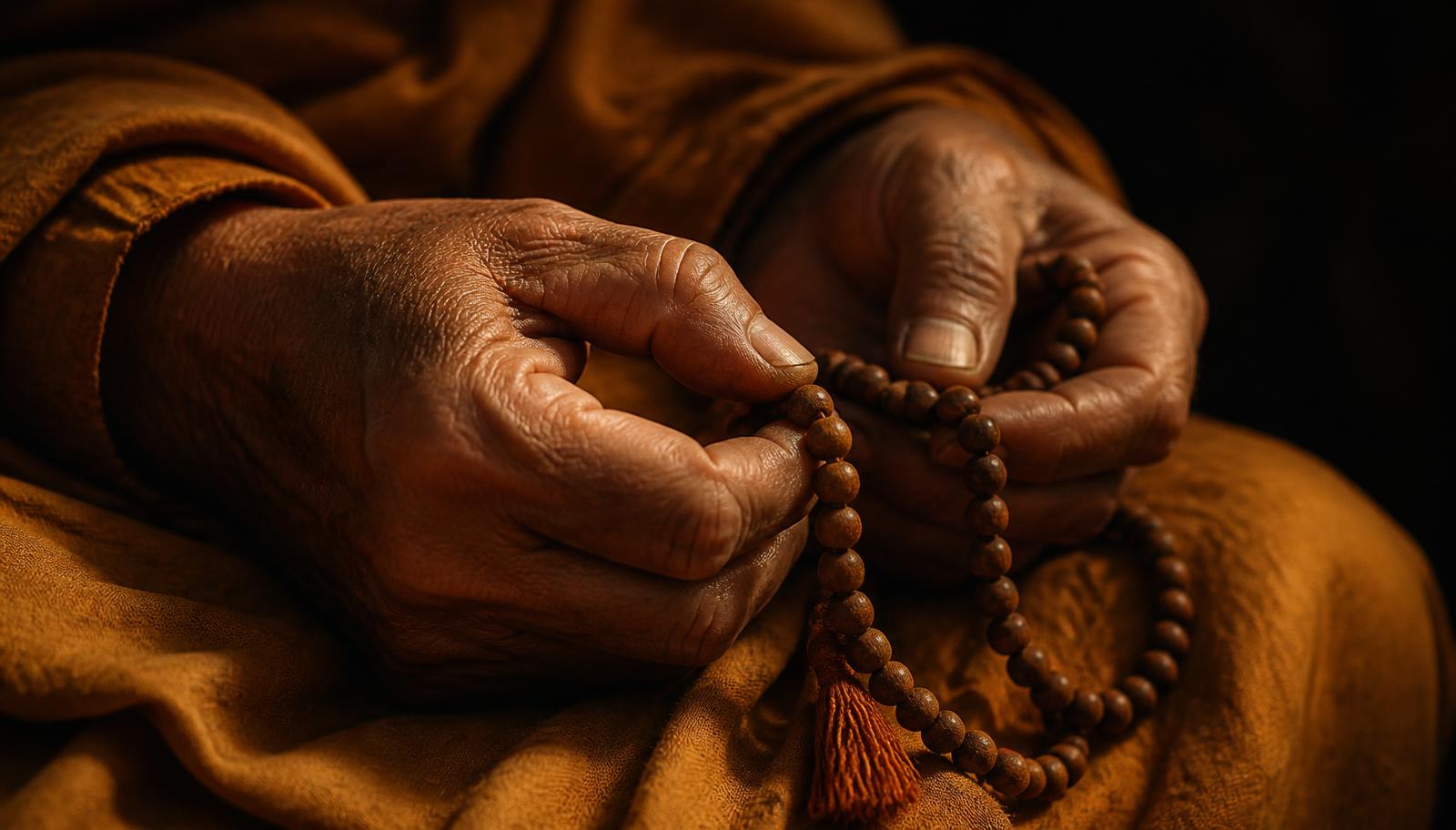
- 1. Hold the mala in one hand. Many practitioners in Hindu traditions use the right hand and drape the mala over the middle finger, moving beads with the thumb, while the index finger is traditionally kept clear — it is associated with the ego in some teachings and simply avoided by custom in others. Tibetan Buddhist practice commonly counts with the thumb against the middle or ring finger. These customs differ between lineages and teachers, and none of them is the single correct method.
- 2. Begin next to the guru bead. Start on the first counting bead adjacent to it, not on the guru bead itself.
- 3. One repetition, one bead. Say or think the mantra once, then draw the next bead toward you with the thumb. Move at a pace that lets the words stay clear — this is usually slower than it first feels natural to go.
- 4. Continue bead by bead around the strand until you reach the guru bead again, having completed 108 repetitions (or the count of your mala).
- 5. Do not cross the guru bead. If you wish to continue for further rounds, the custom in most traditions is to pause at the guru bead, reverse the direction of the mala in your hand, and begin counting back the way you came, rather than crossing over it to start a new round. Crossing the guru bead is generally considered discourteous, something like stepping over a teacher.
- 6. Finish where you started. A round ends when you return to the guru bead. Many practitioners pause there briefly before setting the mala down.
Voice
Silent, whispered, or aloud
Japa is traditionally described in three registers: vācika (spoken aloud), upāṃśu (whispered, barely audible), and mānasa (silent, mental repetition only). None is presented in the source texts as superior in every circumstance — aloud repetition can help early practice or group settings; silent repetition is often described as suited to sustained, private practice. Choose based on your setting and what actually holds your attention, and expect this to change over time.
Time
How long a round takes
A round of 108 varies widely depending on the mantra's length and the pace kept — anywhere from around ten minutes to well over twenty for a longer phrase said slowly. There is no correct duration. Consistency matters more than length; a short round returned to daily generally serves a practice better than an occasional long one.
Common difficulties
What to do when it doesn't go smoothly
Losing count. This is normal and not a failure. If you lose track mid-round, simply continue rather than restarting — the count matters less than the continuity of attention. Some practitioners find spacer beads (see What Is a Mala) helpful for this reason.
Mind wandering. Expected, not a sign of doing it wrong. Return attention to the bead in your hand and the word being said, as many times as needed.
Boredom or restlessness. Often a sign to shorten the session rather than push through it. A brief practice kept daily builds more steadily than a long one abandoned after a few days.
Physical discomfort in the hand. Switch hands, rest the mala in your lap rather than holding it aloft, or use a shorter wrist mala for brief sessions.